Jerusalem City
Here There Is No WhyJerusalem City is not merely the setting in which the narrator studies, investigates, and returns; it is the book’s governing spatial argument. The city gathers the intimate and the political into the same streets: a university classroom can lead to a lifelong relationship, a residential balcony can become the site of a disputed death, and a sacred tunnel can place religious ritual beside the machinery of state power. Through Jerusalem City, private memory repeatedly opens onto the Holocaust, the Israeli–Palestinian conflict, religious division, and the unresolved question of who may claim a place as home.
Education, Encounter, and Belonging
Jerusalem City first appears as the setting of the narrator’s earlier life as a student at Hebrew University in Jerusalem. During the One Year Program, the narrator occupies an English-speaking North American social bubble, even while learning to manage daily transactions in Hebrew. That insulated existence makes Michal’s presence striking when she sits beside him on the first day of Chaim Lerner’s theology class. He has already noticed her around Mount Scopus—in the Frank Sinatra cafeteria, in the administration building arguing with the registrar, and at the library kiosk—and her Israeli identity marks a social boundary that his student world has largely avoided crossing.
The classroom encounter leads the narrator to Chaim Lerner, whose authority is immediately personal rather than merely academic. Outside class, Michal introduces them, and Lerner grasps the narrator’s hand in both of his warm fists, telling him that he is honored to meet him and inviting him to dinner. The gesture contrasts with the narrator’s experience at Northwestern University, where professors remained distant and anonymous. Jerusalem City therefore begins as a place where intellectual life is unusually porous: the university does not simply transmit ideas, but opens into friendship, mentorship, religious practice, and the future investigation of Lerner’s death.
Sacred Space and the Memory of Death
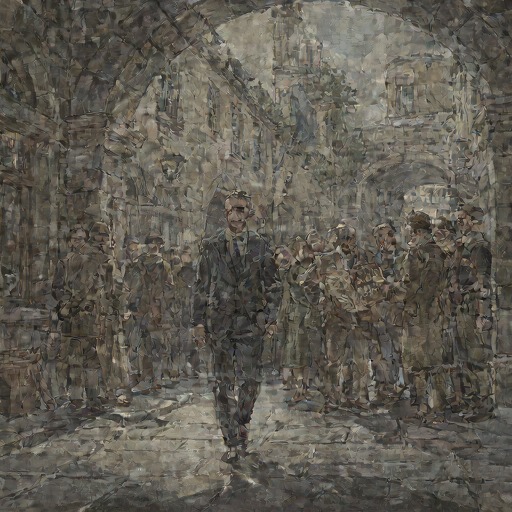
The city’s sacred geography becomes central when Lerner brings the narrator to the Western Wall before sunrise. The narrator arrives at 6:45 a.m.; five minutes later, Lerner approaches in a black coat, white shirt, blue tie, and professorially mischievous grin, carrying books and an Arab-style head covering but no cane despite his limp. He leads the narrator through the stone archway into the tunneled section of the Kotel, where black-hatted men sway, chant, touch the stones, and gather for study. The narrow chamber, filled with folding chairs and prominent Israeli officials, becomes an unexpected meeting point between ancient religious practice and modern political authority.
This scene gives Jerusalem City a second identity as a place where competing forms of power coexist without resolving one another. The room includes the deputy defense minister, a former finance minister, the director general of the foreign ministry, and the chief executive of Bank Leumi, while an elderly teacher begins the lesson with the assistance of younger haredim. Lerner’s access to this world reflects his effort to engage groups he considers his ideological adversaries. The city’s walls and tunnels preserve memory, but they also organize living networks of influence, belief, and exclusion.
The most charged Jerusalem location is the Lerner home, especially its third-story balcony. On returning to the city years later, the narrator is taken by Michal to a small cottage beside Zehava Lerner’s three-story building on Jeremiah Street in Geula. The narrator recognizes the street from more than twenty years earlier, while Michal insists that the building is now Zehava’s place rather than Chaim’s. Hannah, however, wants to see the balcony “where it happened.” Inside the house, the three climb three flights of stairs; the narrator’s heartbeat quickens from both exertion and anxiety as they approach the site of Lerner’s last fall.
Hannah examines the dark metal railing slowly and methodically, then studies the dusty white floor. Her physical scrutiny turns the balcony into an evidentiary object rather than a memorial. She concludes that Lerner did not jump because, with his injured knee, he could not have climbed over the railing. The conclusion changes the meaning of the house: what appears to be a domestic scene of suicide becomes a contested crime scene, and Jerusalem City becomes the place where an old public narrative can be materially reexamined through architecture, bodily limitation, and the arrangement of a barrier.
The City and Its Political Boundaries
Jerusalem City also functions as the center from which the book’s larger political geography radiates. Lerner’s project of reconciliation requires him to address the haredim and the West Bank religious settlers, whom he describes as people he hates and people who hate him. From Jerusalem, he travels toward Pisgat David, a West Bank settlement that defeats the narrator’s expectations. Instead of tents, guard towers, and barbed wire, the settlement presents a brightly colored welcome sign, large red-roofed houses, garages, driveways, lawns, and children playing American football. Its appearance resembles Shaker Heights, Ohio, more than the apartment blocks the narrator associates with Jerusalem, Tel Aviv, and Haifa.
The contrast exposes how political space is produced through ordinary domestic forms. Pisgat David’s contested status is not represented only by soldiers or fortifications; it is also embodied in suburban architecture, lawns, signs, and the normality of family life. Yet the settlement remains connected to Jerusalem City through Lerner’s lecture and through the narrator’s evolving understanding of the territory surrounding the city. In a theater holding roughly one thousand people, Lerner speaks in Hebrew to an audience that first laughs loudly and then falls nearly silent as tears appear. The settlement is thus not a distant abstraction but a public audience, a community with its own emotional and ideological response to a speaker who has come to confront it.
The same spatial system extends beyond Jerusalem City to refugee camps, Palestinian villages, and Israeli towns. In the account of Kamal’s failed suicide bombing attempt, the intended target is Sbarro’s in Hod Hasharon, less than twenty minutes from Dheisheh Refugee Camp, where Kamal lives. He links his motive to a village near that city, to his grandparents’ expulsion during the Nakba, and to his grandfather’s interrupted medical education and later death. The geography is presented as a chain rather than a series of isolated points: camp, former village, Jewish city, and Jerusalem’s wider political orbit remain joined by roads, memory, displacement, and retaliatory violence.
Return, Investigation, and Historical Continuity
For the narrator, Jerusalem City is also the place to which professional and personal obligations return him. His investigation begins with an old fascination with the life and death of Chaim Lerner, a Holocaust survivor and public intellectual whom he once worked for as a student in Jerusalem. While in rehabilitation, rereading Lerner’s Our Imperfect God and his Holocaust memories, the narrator hears Lerner’s voice and mentally revisits their conversations. The city is therefore recovered first through recollection: its classes, streets, religious sites, and relationships re-enter the present through the narrator’s attempt to understand whether Lerner’s death was suicide, an effect of Holocaust trauma, a consequence of his theology, an accident, or murder.
When the narrator returns with Hannah, Jerusalem City makes that investigation physically unavoidable. Michal rents them a cottage directly beside the Lerner home, Zehava invites them to dinner, and Hannah insists on visiting the balcony before they even settle their luggage. The city compresses generations and roles into adjoining spaces: the narrator’s former teacher, his former lover Michal, his daughter Hannah, Zehava’s political career, and Lerner’s death all meet within a few steps of one another. The arrangement makes Jerusalem City feel less like a backdrop than an archive whose rooms and streets compel the past to be revisited.
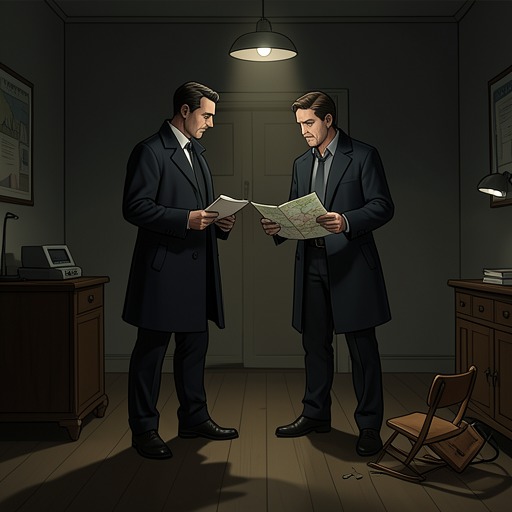
That archive remains politically unfinished. Zehava becomes a leading figure in Israel’s political opposition after the Second Intifada, and respectable commentators predict that she might become the first woman prime minister since Golda Meir. Later, she and her team hold secret peace meetings with Palestinian negotiators in London. The negotiations concern the West Bank, Jerusalem, Palestinian refugees, recognition of Israel as a Jewish state, the connection between Gaza and the West Bank, and the role of Hamas. Maps place Pisgat David on the Palestinian side in both versions glimpsed by the narrator, producing an unsettling spatial question about the settlement’s future and about what Lerner might have thought of its possible reclassification.
The talks collapse after a brief period of warmth, while the conflict surrounding Jerusalem City continues through terrorism, barriers, missiles, incendiary kites, Israeli bombs, tanks, and new settlements. A bomb outside the Russian Compound kills Charlie, the head of Israel’s police homicide division and the narrator’s friend. The city thus ends not in reconciliation but in recurrence: sacred stones, political offices, homes, roads, and police sites all remain exposed to the same history of aspiration and violence. Jerusalem City’s decisive significance lies in this refusal to separate personal grief from public geography. Every return to the city reopens a question about death, belonging, responsibility, and the boundaries that history has built into the landscape.